
Leaderboard
-
bmags
Admin14Points62,242Posts -
southsider2k5
Admin12Points187,202Posts -
Chicago White Sox
Members8Points40,832Posts -
fathom
Members6Points151,884Posts



Popular Content
Showing content with the highest reputation on 11/12/2022 in Posts
-
6 points
-
The only thing I do expect from Grandal is another lower body injury.6 points
-
5 points
-
Can we please stop using BBTV as gospel? It’s a fun little tool, but their player valuations are very hit or miss. For example, Kopech is worth considerably more than how they value him.5 points
-
The Grandal signing made perfect sense because we desperately needed a guy who could work counts and take walks, and he has given us exactly that. Yes, his defense is not what you would hope for in a catcher, but if it was that detrimental to a team, Grandal wouldn’t have made the playoffs 7 straight years before 2022.3 points
-
I'm here, 100%. At this stage of my fandom, I want literally nothing out of the C slot but excellent defense and the confidence of the pitching staff. Offense is bonus, and if you get a Realmuto, congrats on winning the lottery. But that type of guy is too expensive to buy and too hard to try to develop. This is why I disliked the Grandal signing the moment it happened. I assumed he was going to hit (and he generally has), but Grandal has always seemed like the prototypical example of the edge case where analytics fails you because you don't recognize that the value a player provides is often mostly CORRELATED with the things you can measure, as opposed to literally represented in those things. For example, catchers that are elite framers and have great arms aren't valuable only because of those two characteristics, but because guys with those characteristics tend to also be great blockers, game callers, and leaders. If you find an anomaly like Grandal, where he has the two things you can measure but every pitcher he's worked with hates him, and you know he can't block a ball in the dirt -- well there's a reason that the Sox were able to get him at the price they wanted to pay. Smarter organizations know how to interpret the numbers; they know what they say AND what they don't say. Rick Hahn seems like he just finally signed up for a FanGraphs paid membership and an intern gave him a StatCast login, and he's playing around for the first time, having to get things horribly wrong in order to learn how to make them right.3 points
-
So the part of this that really annoys me? The White Sox shouldn’t need a catcher the next few years unless they do one bad thing they’ve done before. It is not that hard to get average production from your catcher spot. The White Sox got nearly 2 WAR from Seby Zavala last year and also picked up and then traded away a 1 WAR catcher in Reese McGuire. Luke Maile put up a .627 OPS, got 200 plate appearances, and still put up 0.7 WAR for Cleveland. All you have to do to be a valuable catcher is not be terrible defensively. The White Sox decided Omar Narvaez had no skills as a catcher and dumped him. He found organizations with better coaches and became a solid defensive catcher. Last year he played half the season, put up a .597 OPS, but still was a 1.1 WAR catcher. Right now the White Sox have Carlos Perez, a 26 year old who hit 21 home runs last year at Charlotte, and Seby Zavala, a 2 WAR catcher last year, both pre arbitration. The only reason these two can’t cheaply give them 2-3 WAR, maybe better, as soon as 2024 is that they aren’t being coached so they can’t be counted on to be average defensively. That’s true even if Seby can’t repeat his 2022 offensive performance, if he can then he might be better than that alone. While Murphy would be an upgrade over that, it’s not worth trading away a guy you hope will be a star himself in Montgomery in order to avoid having to deal with teaching your young catcher things when that’s all the upgrade you get.3 points
-
There should be optimism. The front office that thought Rodon was hopelessly injured is now searching for catcher replacements for Grandal. If anything that means grandal AS selection,3 points
-
so yes, when a great player becomes available, it is good to check in.3 points
-
Yay is here one more year. Yes he sucked in 2022; but it makes no sense to waive him now. See what he looks like in the spring. He is working hard right now. I don’t know if Murphy is the answer given the Cost, but the Sox could use a catcher. I say trade Seby if you can. It would be trading high. He hit, does anyone really expect that to continue. I say get a guy like Barnhart who will be pretty cheap, and does everything well but hit and run. He wouldn’t kill you if he had to start 85 times. See where Yaz is at in AZ. If he still has some gas, fine, if not, waive him then.3 points
-
2 pointsI did a detailed history of SportsVision and am writing the chapter on it for Dr. Fletcher's next book. Just FYI, the Sox actually offered Harry more money to stay with the team for the 1982 season than the Cubs did, but Harry wanted no part of Sportsvision nor the owners. Committing "Harry Caray" But one more problem developed because of the SportsVision idea which had long term negative effects towards the Sox. That involved popular announcer Harry Caray. Caray had been with the Sox since 1971 and had developed a tremendous following. In many desolate years Caray was the only reason to pay any attention to the Sox. His style was aggressive, he wasn’t afraid to pan the players or for that matter rip the owners. Caray wasn’t a saint by any means, he had a tremendous ego himself and could be spiteful towards those he didn’t care for, like fellow announcer and former Sox catcher J.C. Martin, whom Caray felt had no business being in a television booth, but to Sox fans he was the best asset the team had. When Einhorn and his partner Jerry Reinsdorf took over the Sox, Caray became intolerable to them. Einhorn is quoted in Logan’s book as saying, "we were a freak show. The fans thought Harry and Jimmy (Piersall) were the stars. Things were insane." Caray for his part, kept his personal feelings about the new owners and his relationship with them to himself, until the ties were severed between them. Afterwards he made no bones about how he felt, saying in his autobiography that Sox fans would ask him why he left and why he went to the Cubs. Caray said he loved Sox fans and loved Comiskey Park but he couldn’t stand the owners, going so far as to call them an unflattering name in the book and saying they knew nothing about running a team. Despite the strained relationship the Sox would have brought Caray back for the 1982 season when he decided to leave and signed a deal with the Cubs. According to producer Noel Gimble, quoting Steve Stone, in his documentary on Caray’s career called, “Hello Again Everybody” the Sox actually offered to pay Caray more money than he signed on to do the Cubs for. In Logan’s book, Caray had this to say, "They wanted to sign me again, but with SportsVision, the White Sox are the best kept secret in Chicago. If their games were on free TV, they’d own the town now and be a byword across the nation." (Author’s Note: because of now "Superstation WGN") I gave them some good advice at that contract meeting. I told them, “you guys came in as owners with a positive image and became villains by taking Jimmy (Piersall) out of the broadcast booth. Why don’t you get back in the fans’ good graces by putting us back together on the TV team" Caray continued with Reinsdorf’s reply. "Jerry answered, ‘Harry, I’ll be up in heaven looking down before Piersall broadcasts another one of our games,’ and Einhorn said, ‘with you or without you, the White Sox are going into SportsVision and away from free TV. " Logan’s book quotes Caray as saying "that’s when I made up my mind to leave. They were talking about maybe reaching 50,000 homes on pay TV instead of the 22 million people who watch the Cubs on WGN." The final word in the Caray / Sox owner’s feud came on the night of September 17, 1983. After the Sox clinched the Western Division Championship and before a national audience, since WGN received permission to take the SportsVision feed of the 9th inning and post-game interviews, Reinsdorf issued a final blast. During an interview with "Hawk" Harrelson, Reinsdorf said, “wherever you’re at, Harry and Jimmy, eat your hearts out. I hope people realize what scum you are.” Harrelson was momentarily speechless. Like him or not, letting Caray leave turned out to be a huge mistake. Caray became the “Pied Piper” of the North Side and came into the situation just about the time the Wrigleyville neighborhood became trendy with young, upscale individuals who decided going to see the Cubs was the thing to do. The Cubs made the playoffs in 1984 and with their games being shown coast to coast on WGN, fans everywhere who didn’t owe an allegiance to a particular team, seemed to become Cub fans. The Cubs would ride this wave to become the dominant team in Chicago despite many lousy years on the playing field. They would win the important public relations battle for the hearts and minds of neutral Chicagoans. With fans flocking to see the "shrine" (i.e. Wrigley Field) it didn’t matter if the Cubs won or lost, they were making money hand over foot.2 points
-
God empty OBP is right. The guy is so slow that it takes 3 singles to score him.2 points
-
If Yaz could get back on the juice and give us at least half a season's worth of good production before he gets caught, that'd be great.2 points
-
I haven’t seen anything, but I’m not claiming he WILL bounce back. I have no clue, and you have no clue. What I do know is that Grandal is only 14 months removed from a time when he was completely carrying the team on offense. I don’t expect to see that Grandal again, but I do think a wRC+ in the 105/110 range is more likely than the 68 he put up last year.2 points
-
Your current catcher cannot play on a major league roster and is making 18 million a year. Murphy is a young upcoming catcher. Pretty simple, but since the Sox are already linked to him a deal for him won’t happen2 points
-
2 pointsTLR was a disaster, but they still made the playoffs his first season. Biggest blunder was going to pay tv and dumping Harry Carey not long after buying the team. Lost a generation of fans.2 points
-
2 pointsThe best part of Hahn saying we’ll need to trade to address our needs is him not accepting the reality that we don’t have much to trade. We literally couldn’t do anything at the trade deadline last year except acquire a reliever for our backup catcher. The previous deadline required us to trade our starting 2B and a major league reliever to improve our bullpen. The off-season before we had to trade major league starter to improve the rotation. I can’t wait until he signs a couple of non-impact free agents and then complains about how expensive the trade market was. It truly is amazing how incompetent the dude really is.2 points
-
2 pointsAll I know is 2 years were wasted with the hiring of TLR, this might have JR's biggest blunder in his 41 years of his torturous ownership with so many blunders, it's a miracle that there are still White Sox fans around on the planet.2 points
-
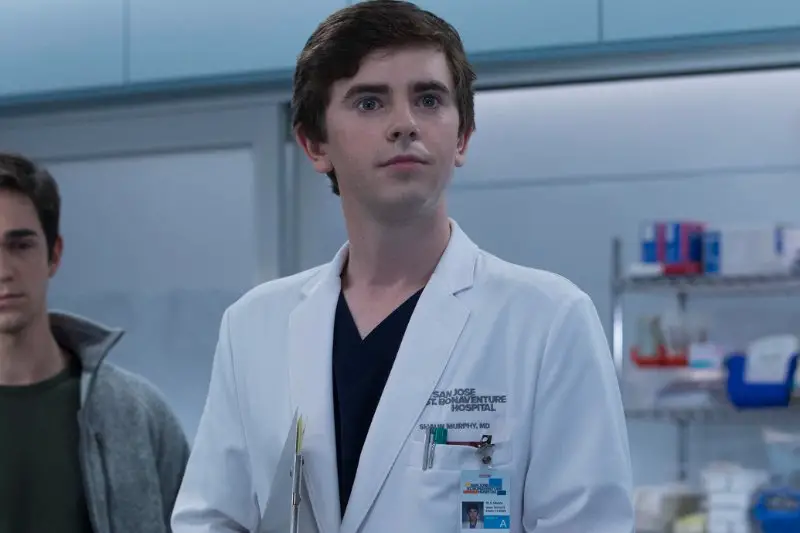
Of course we will end up with this guy
 2 points
 -
I’m not saying he isn’t a net positive, I’m saying there are many other places on the diamond you can choose to invest to get that kind of offense, and you can focus on defense at C and get production that the white Sox haven’t seen. Playing time is a zero sum game, but production isn’t. Maybe @bmags is right and they don’t make the playoffs in 2021 without Grandals bat, but the option when designing the roster wasn’t necessarily “have it or don’t”. What if they had a high end bat instead of a black hole in RF? What if then they got much better production on the other side of the ball at C? It’s easier to buy a bat in RF than one at C, but you can’t get what the C provides on defense anywhere else. A more productive duo at those spots may have made so they not only made the playoffs in 2021 but also didn’t get embarrassed in them.1 point
-
1 pointSpend some friggin money on a couple of aces and have Kopech-Garrett as your modern day Gossage-Forester.1 point
-
1 pointThe timing was bad and it wasn't with cable, it was goofy looking over the air antenna that alien travelers might have brought from Mars and the picture wasn't exactly crystal clear.1 point
-
1 pointMy politics have not changed. What changed for me for the White Sox was 2 years in a row of the same. 2021 was a wild card year, coming off the shortened season. So you could project health and optimism for the core. And in 2021, even though Grandal was hurt, he had the best OPS+ on the team. But in 2022 the team became unwatchable. Always hurt. Chasing pitches. Terrible defense. Pathetic play from guys with big contracts. Luis Robert no longer being a player to be excited about, but one waiting for the next injury to hit. And Tim Anderson going from being an exciting leader, to an always hurt bad fielding SS who can't run because his legs won't stay healthy. There is not a single position player on the Sox I really like anymore. Jose Abreu was the ONLY guy who showed up every day and hit above average. And he's gone. People blamed LaRussa, who I also made a big mistake in backing. And he was bad. But the players are the ones who lost me. Most of the pitchers too. What happened to Lucas Giolito? Michael Kopech has awesome stuff. How can he lose most of his starts? Aaron Bummer can't stay healthy and can't control his pitches, so the manager has no idea whether he's getting the good or bad Bummer on any given night. Lance Lynn went from workhorse to injured horse. Only Dylan Cease was awesome. The team believed their own hype, and then stunk up the field. I don't know how they won 81 games. And then you have Cleveland, with half the resources, just crushing the Sox with a young team that's going to get better.1 point
-
1 pointIt was a dumb move at the time. Nobody wanted to pay for a product that everyone else was offering free. Plus, while WGN was a superstation and had a strong clear vhf signal in the Chicago area, Sportsvision required a special box with a separate antenna installed on your roof just to watch one station that only offered Sox games. It would be like owning a gas station in 1982 and replacing all your pumps with charging stations because in 40 years people will have electric cars. I guess that would be considered "ahead of it's time. "1 point
-
1 pointThis is the funny part. A certain segment of fans is still upset with stuff from 40 years ago, but in this case Jerry was way ahead of the curve. He was 110% right in this case. Paid TV was the future and it led to an explosion in baseball revenue.1 point
-
1 pointAnd with that Reinsdorf made people realize what scum he is. He's been a lousy owner as well. Einhorn & Reinsdorf helped turn Chicago into a Cubs town.1 point
-
1 pointHarry dumped JR and company, he wanted no part of Sportsvision, he knew that Sportsvision was not going go over big in Chicago as the Cubs were on free TV for 162 games. In the one year he did work for JR and EE he came to realize that those 2 guys were jerks and got out and the rest his history as Harry became a household name across the country on Superstation WGN.1 point
-
What bad contact would you like to take on?1 point
-
1 point
-
At least he’s apparently doing something this offseason and going outside the organization for help has proven to work in the past.1 point
-
I expect him to start too much, play worse defense, enrage us with empty OBP and long stretches of sub par production, and a likely lower body injury that takes three times as along as normal to return from.1 point
-
I would hope catcher is lower on the priority list than SP and OF.1 point
-
Should've kept Narvaez. Much cheaper. Left-handed. While not an offensve machine still a better hitter than Grandal. Better leader. Became better on defense. Grandal has to be one of the worst defensive catchers out there. Omar gets injured but still a better option than Grandal. Again much cheaper. And younger.1 point
-
This seems like such a terrible idea. He doesn’t provide difference-making offense. I’ve pretty much landed in the boat that spending big money on a catcher is one of the worst things a team can do with limited resources.1 point
-
Given the team's propensity to not openly discuss injuries I'm willing to accept there was something wrong this past season. Given the team's propensity to not talk openly about injuries and the curse of the franchise, I'm willing to accept that it is permanent.1 point
-
well, the Sox do also have their FRP too, that 6'9 pitcher FWIW. I don't know, they gotta clean up this first base catcher DH roster monstrosity FFS1 point
-
1 pointShe's a real person - whether she actually hears stuff is another thing all together. I don't recall her ever breaking anything.1 point
-
Really good with his hands and thinks outside the box1 point
-
Trading for the obvious is lazy, unimaginative and you pay a premium price. Right up Hahn''s alley.1 point
-
Grandal's number the past two years are pretty crazy: 2021: 375 PA, 158 wRC+ 2022: 376 PA, 68 wRC+ Seems impossible to fall off a click that badly unless injuries are a significant factor. So the question becomes whether those injuries are lingering/permanent now. None of us know the answer to that question.1 point
-
1 point
-
If I'm understanding this correctly, a team that seemingly doesn't want to take on much payroll this offseason is exploring the opportunity to trade major young assets for a player who plays the same position as Grandal, a 34 year old washed FA signing costing the Sox 18 million dollars in 2023. And he bats right handed. Awesome.1 point
-
1 point
-
Taking fliers on guys like Nick Anderson seems like a much better strategy than paying ~9M AAV for 2nd or 3rd tier relievers like Kelly or Graveman, but what do I know.1 point
-
Murphy is a stud, but blowing up the farm system for a catcher given all of the other needs doesn't strike me as a great idea.1 point
-
1 pointSeems like you have a vendetta against him and can't understand the reasons he hasn't lived up to potential yet. Do you think Jose would have done as well as he's done for us if we asked him to play out of position in his first two years with the club? AV was a #3 draft pick and was deemed the most complete hitter in the entire draft. Play him a full year in his natural position and we will finally see that potential that "People here" envision.1 point
-
Saddens me to read that line. In a matchup between Jose, Sheets, Eloy and Vaughn I take Jose entering his age 36 season every time. I thought Sox were in a window of trying to win it all. Are the Sox quietly rebuilding again? Any fan that bought the rebuild talk should be furious Jose is leaving. We were supposed to win it all next season. You don't win it all by getting rid of your best player. Geez. In what world was Jose not on the projected roster of the Sox next title team? If the Sox tanked all those seasons for nothing, shame on them.1 point
-
Not adding in free agency when you are in the middle of a contention window seems like a strong strategy as well1 point
-
Losing our best bat seems like a strong strategy, I love it1 point
-
1 pointTo me, the upside downside isn't there. We have him for 2 more years at a very reasonable price. SS is one of the deeper positions with 4 premium SS available in this off-season alone. This decreases his relative value this offseason. You also have to consider the in-house options which are currently thin to say the least. There's absolutely no reason to create a hole on this team. You keep him, you see how Colson does this year, you see how TA bounces back after being a year removed from his family issues and reassess next offseason. It seems hard for fans to remember just how good he was at the start of last season. Through the first two months he was batting like .360. Tim is not the issue, nor is his salary. nor is his contract. next offseason you have a ton more clarity in regards to the direction of this team both from a payroll perspective as well as true odds to win. (not to mention Colson). Next year is the year you trade him1 point












.thumb.jpg.a56807a7fe5c83b6a9f37963092612ef.jpg)









This leaderboard is set to Chicago/GMT-05:00